


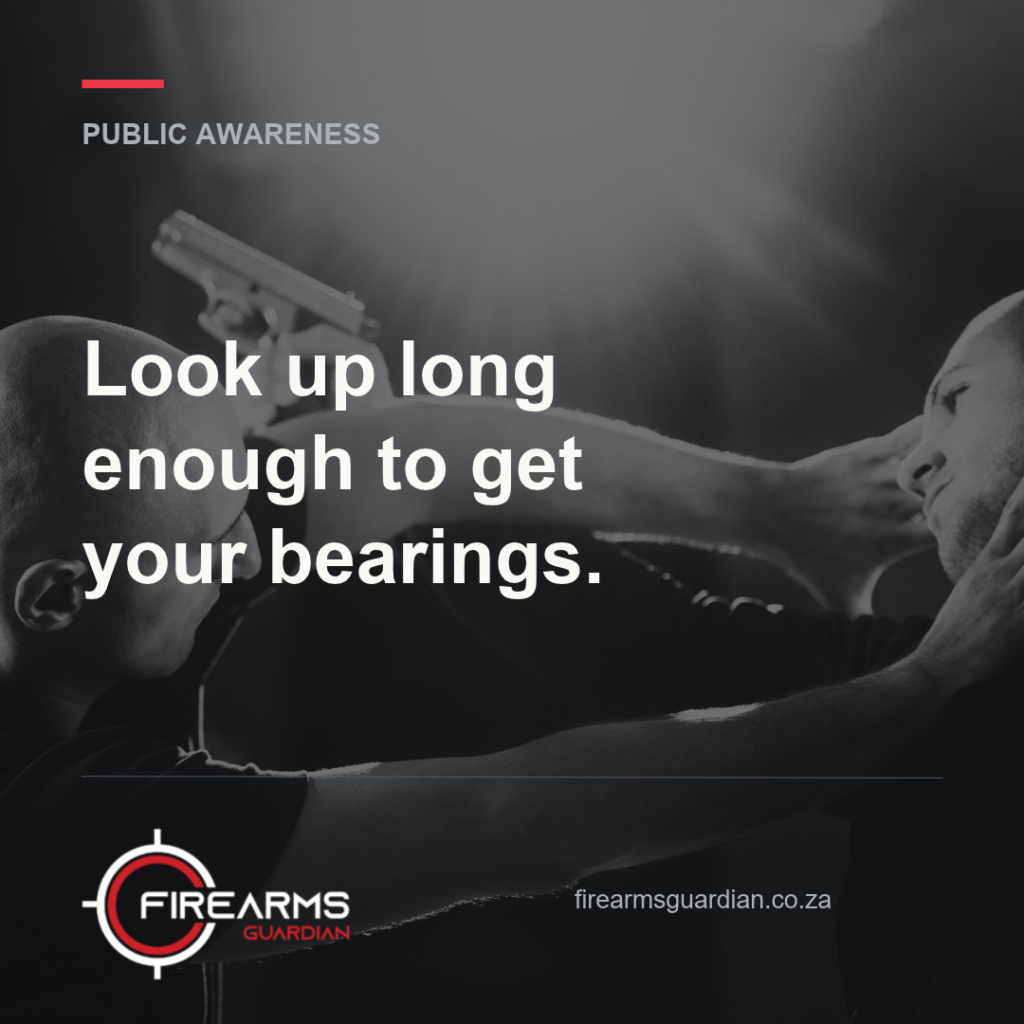
Carrying a firearm in public is a responsibility that extends beyond the decision to carry it. It requires awareness of one’s surroundings, an understanding of the environment and the ability to exercise sound judgement in everyday situations.
There is, however, an important distinction between being alert and being constantly on guard. Responsible firearm ownership does not mean viewing every unfamiliar person with suspicion or interpreting ordinary situations as potential threats. The challenge is to remain attentive and prepared without becoming anxious, confrontational or unnecessarily suspicious of others.
Awareness begins with observation
Situational awareness is about being attentive to what is happening around you. It involves noticing your surroundings, recognising changes in your environment and being mindful of circumstances that could affect your safety or that of others.
This does not mean constantly scanning every person or anticipating danger at every turn. Rather, it means being present and observant instead of becoming completely absorbed in a cellphone, conversation or other distraction.
When entering an unfamiliar public space, for example, take note of your surroundings and familiarise yourself with the general layout. Equally important is avoiding the assumption that unfamiliar behaviour is automatically threatening. People behave differently for many reasons, and an unusual appearance or mannerism is not, in itself, evidence of malicious intent.
Awareness provides information; good judgement determines how we respond to it.
Different environments require different considerations
A busy shopping centre, restaurant, place of worship, school event or crowded public gathering each presents different practical considerations. Responsible firearm owners should familiarise themselves with the environment they are entering and establish whether carrying is permitted.
For example, firearms are prohibited on school premises, and certain government premises have been formally declared firearm-free zones under section 140 of the Firearms Control Act. It is therefore important for firearm owners to familiarise themselves with the Act and remain aware of applicable restrictions.
Section 84 also regulates the carrying of firearms in public places. It requires a handgun to be carried in an appropriate holster or similar holder attached to the body, or in a rucksack or similar holder. Other firearms must be carried in a suitable holder. In all cases, the firearm must be completely covered, and the person carrying it must be able to exercise effective control over it.
Responsible behaviour matters
Carrying a firearm should encourage greater self-discipline, not bravado. A firearm is not a means of establishing authority, intimidating others or winning an argument.
Responsible conduct includes avoiding unnecessary confrontations, managing frustration and exercising restraint during challenging interactions. Everyday disagreements and minor provocations rarely justify escalation. Unnecessary handling or adjustment of a firearm in public should also be avoided, and firearms must never be left unattended or accessible to unauthorised persons.
Section 120(8) of the Act reinforces the responsibility to lock a firearm away in a prescribed safe or other approved device when it is not carried on one’s person or under one’s direct control.
Personal circumstances matter too. Fatigue, emotional distress and alcohol consumption can affect judgement. Responsible ownership includes recognising when one’s ability to handle a firearm safely and exercise sound judgement may be compromised.
Confidence comes from preparation, not fear
Appropriate training helps firearm owners become familiar with their equipment, reinforce safe handling habits and develop confidence in their ability to act responsibly. It also provides opportunities to reflect on judgement, restraint and the responsibilities associated with carrying a firearm.
An important part of preparation is recognising that not every difficult situation requires intervention. Knowing when to disengage, avoid an argument or remove oneself from an uncomfortable environment is often a demonstration of sound judgement rather than weakness.
A balanced approach to everyday carrying
Ultimately, responsible firearm carrying is about finding a balance between preparedness and perspective. The firearm itself is only one part of a much broader commitment to safety, restraint and accountability.
The goal is not to live in anticipation of danger, but to remain attentive, exercise sound judgement and carry responsibly while continuing to live an ordinary, balanced life.
