


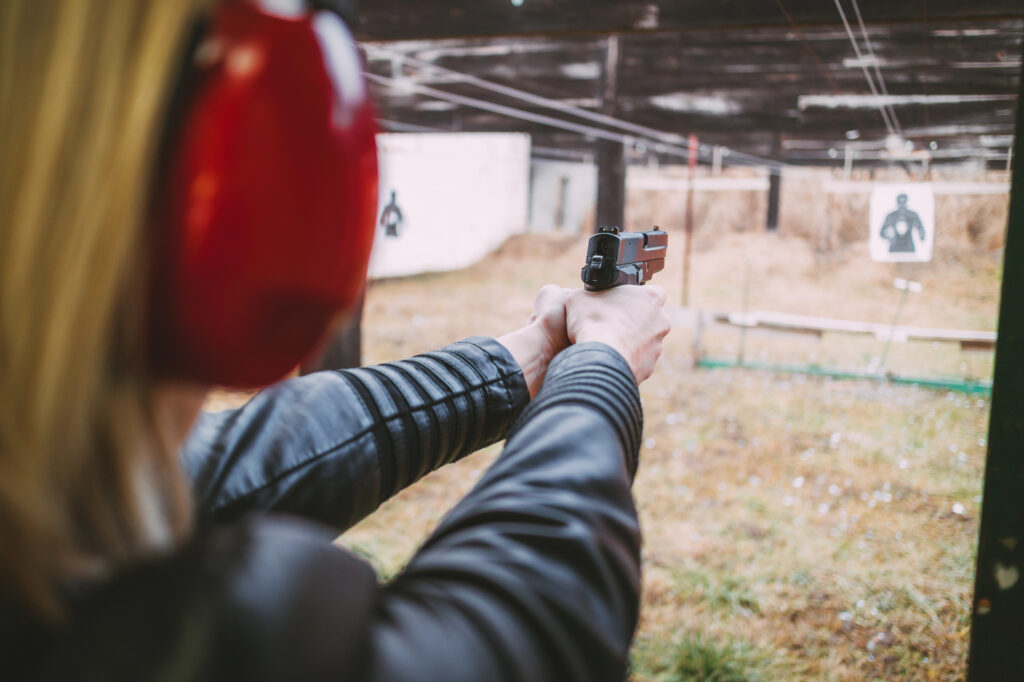
Regular practice is what separates responsible firearm owners from everyone else. Skill with a firearm is not something you buy; it is something you build through repetition, awareness and structured training. If you are heading to the range for the first time, this guide will help you make the most of your session while developing safe, confident habits.
1. Set clear, measurable goals
Before you even leave home, decide what you want to learn or improve. Do not just “go shoot.” Instead, set a specific goal such as:
- “I want to hit 8 out of 10 rounds inside the centre ring at 10 metres.”
- “I want to practise drawing from my holster safely and smoothly.”
- “I want to learn to clear a jam without assistance.”
Write your goal down and take it with you. When you know what you are trying to achieve, your training becomes focused and measurable. Over time, you will see progress instead of guessing whether you are improving.
2. Plan your drills and the order you will do them in
Think of a drill as a short exercise designed to build a specific skill, much like a rugby player practising line-outs or conversions. Plan your session in three stages:
- Warm-up drills: slow, easy shots at short distances to focus on stance, grip and trigger control.
- Core drills: skill-building exercises such as reloading, shooting from different positions or timed accuracy drills.
- Scenario drills: once you are confident, you can later simulate defensive situations (always under range supervision).
If you are unsure which drills to try, ask the range officer or a qualified instructor to demonstrate safe, beginner-friendly exercises.
3. Pack and check your gear
A good range day starts with preparation. Pack the following:
- Firearm and magazines (at least two if possible)
- Ammunition; start with 100 to 150 rounds for a beginner session
- Eye and ear protection; safety glasses and earmuffs are non-negotiable
- Targets and masking tape to cover bullet holes between rounds
- Basic cleaning kit and multi-tool for quick fixes
- Your firearm licence and range membership card
Before you leave, check that your firearm is unloaded, clean and mechanically sound. This prevents frustration and wasted time once you are at the range.
4. Begin with dry practice
Before any live ammunition is fired, start with dry practice: handling your unloaded firearm to perfect your grip, stance, sight alignment and trigger press.
For example:
- Practise drawing your firearm from your holster and pointing it safely at the target (finger off the trigger).
- Align your sights and slowly squeeze the trigger until you feel the “click.”
- Practise reloading motions without live rounds.
Dry practice builds muscle memory and reduces anxiety. It is the best way to reinforce safe habits before any live fire begins.
5. Warm up slowly and focus on the fundamentals
Your first live shots should be slow and deliberate. Focus on:
- Grip: hold the firearm firmly but not rigidly.
- Stance: feet shoulder-width apart, body leaning slightly forward.
- Sight picture: front sight in sharp focus, rear sight slightly blurred, target behind it.
- Trigger control: press the trigger smoothly without jerking or anticipating recoil.
Start at a short distance (5 to 7 metres). Do not rush; accuracy comes before speed. Your goal is to place tight, consistent groups in the target’s centre.
6. Learn the basic drills
Once you are comfortable with the basics, try some simple skill drills:
- Accuracy drill: Fire five slow shots at a single target, concentrating on sight alignment and trigger control. Circle your shot group to see your consistency. Try again and aim for a tighter grouping.
- Split times: This measures how quickly you can fire accurate follow-up shots. After each shot, reacquire your sights as fast as possible while staying on target. Use a shot timer if your range allows it.
- Transitions: Practise moving the firearm smoothly from one target to another, maintaining focus and muzzle control.
- Strong- and weak-hand shooting: Fire a few rounds using only your dominant hand, then your non-dominant (support) hand. This builds confidence and control in case you ever need to shoot one-handed.
These drills are the foundation of all higher-level training. Take your time and repeat them consistently.
7. Practise malfunction clearing
Every firearm can jam. Learn to recognise and fix it safely:
- Tap-Rack-Bang drill: Tap the bottom of the magazine to ensure it is seated, rack the slide to eject a bad round, and fire again.
- If you encounter a double feed (two rounds stuck), remove the magazine, rack the slide several times to clear the chamber, reload and continue.
Always keep the muzzle pointed downrange and your finger off the trigger while resolving any malfunction.
8. Keep a training log
After your session, jot down what you did and how it went. Include:
- Date and range name
- Drills practised
- Distances and results
- What you struggled with and what improved
You can also take a photo of your targets to track your progress visually. Over time, this becomes a valuable record of growth and helps you set new goals.
9. Clean, maintain and reflect
When you get home, clean your firearm thoroughly. Remove powder residue, oil the moving parts and inspect your magazines for dirt or damage.
Then, reflect on your session:
- What did you learn?
- What will you do differently next time?
- Which drills do you want to repeat or advance?
Regular reflection ensures that every range day builds on the last.
Owning a firearm comes with serious responsibility. But it also offers the freedom and peace of mind that come from competence. Every bullet fired in training builds the discipline, judgment and safety habits that define a true firearm owner.
Whether it is your first or fiftieth visit to the range, train with intention. Focus on safety, consistency and continuous improvement. The more you train, the more prepared you will be to protect what matters most.
Firearms.co.za encourages every owner to invest in proper, regular training. It is not only your right; it is your duty.

