


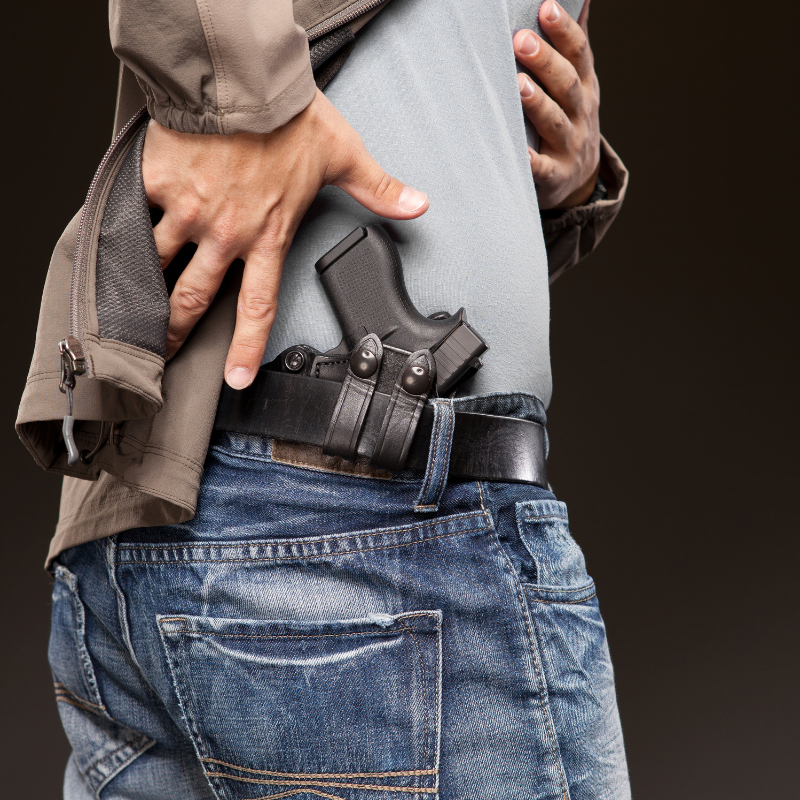
Owning a firearm comes with responsibility, and choosing the right holster is an important part of that responsibility. A holster is not simply a convenient way to carry a firearm. It should keep the firearm secure, protect the trigger, provide consistent positioning and allow the firearm to be carried safely and comfortably.
With the growing range of holsters available in South Africa, choosing one can be confusing. Should you choose inside-the-waistband (IWB) or outside-the-waistband (OWB)? Is Kydex better than leather? And does being a woman mean you need a specially designed women’s holster?
There is no single answer. The right holster depends on the firearm, the individual, clothing, daily activities and intended use.
Start with safety
The most important consideration is whether the holster is designed specifically for the firearm being carried.
A properly fitted holster should cover and protect the trigger guard and hold the firearm securely. South African firearms legislation requires a handgun carried in public to be carried in a holster or similar holder designed, manufactured or adapted for that purpose. (saps.gov.za)
A good holster should also provide adequate retention. The firearm should remain securely in place during ordinary movement such as walking, sitting down or getting into a vehicle.
Avoid choosing a holster simply because it is inexpensive or looks attractive. A holster is safety equipment, and its construction and fit matter.
IWB or OWB?
Two of the most common choices are inside-the-waistband (IWB) and outside-the-waistband (OWB) holsters.
IWB holsters are worn inside the waistband and are commonly chosen for concealed carry because the firearm sits closer to the body. South African manufacturers such as Daniel’s Holsters, Highlander Holsters and SouthWest Holsters offer a variety of IWB options. (highlanderholsters.co.za)
OWB holsters sit outside the waistband. They can be comfortable and provide easy access, particularly for range use or situations where concealment is not the primary consideration.
Neither option is automatically “better”. The important question is which design is appropriate for your particular needs and circumstances.
What about women?
Choosing a holster is not simply a matter of choosing between a “men’s” and a “women’s” product.
Women’s bodies, clothing and daily routines can differ considerably, but there is also enormous variation between individual women. A woman who normally wears jeans and a belt may have very different requirements from someone who wears dresses or fitted clothing.
South Africa has a range of options that accommodate different body types and clothing preferences. Some manufacturers also offer adjustable ride height, different attachment systems and left-handed configurations. (danielsholsters.co.za)
The principle is simple: choose a holster for the person who will actually wear it, rather than choosing one based solely on gender.
Kydex, leather or fabric?
Kydex has become increasingly popular for everyday carry. It is a rigid thermoplastic that can be moulded closely to a particular firearm. South African manufacturers such as Highlander Holsters, Hindernis, Daniel’s Holsters and Guns & Tactics produce locally made Kydex options. (highlanderholsters.co.za)
Leather remains a traditional choice and can be comfortable, while fabric and other materials are also available.
The material itself, however, does not determine whether a holster is safe. Fit, trigger protection, retention, construction and suitability for the intended use are more important than the material.
Comfort matters too
A holster may meet every technical requirement, but if it is uncomfortable, the owner may constantly adjust it, remove it during the day or eventually stop using it.
Consider your normal routine. Do you spend most of the day sitting? Do you drive frequently? Do you work outdoors? What type of clothing do you normally wear?
The holster should work with your lifestyle rather than forcing you to change your entire lifestyle around the holster.
Comfort should never override safety, but it is an important part of choosing equipment that you will use consistently and correctly.
Before you buy
Ask yourself:
- Is it specifically designed for my exact firearm?
- Does it adequately protect the trigger?
- Does it retain the firearm securely?
- Is it suitable for my intended method of carry?
- Is it comfortable for my normal daily activities?
- Does it work with the clothing I normally wear?
- Is the attachment system secure and appropriate?
- Have I received proper training in safe firearm handling and carrying?
A good holster should become part of a responsible firearm-carry system, not an afterthought.
There is no universally perfect holster. The best choice is the one that provides the required level of safety and retention while fitting your firearm, your body and your everyday circumstances.

