


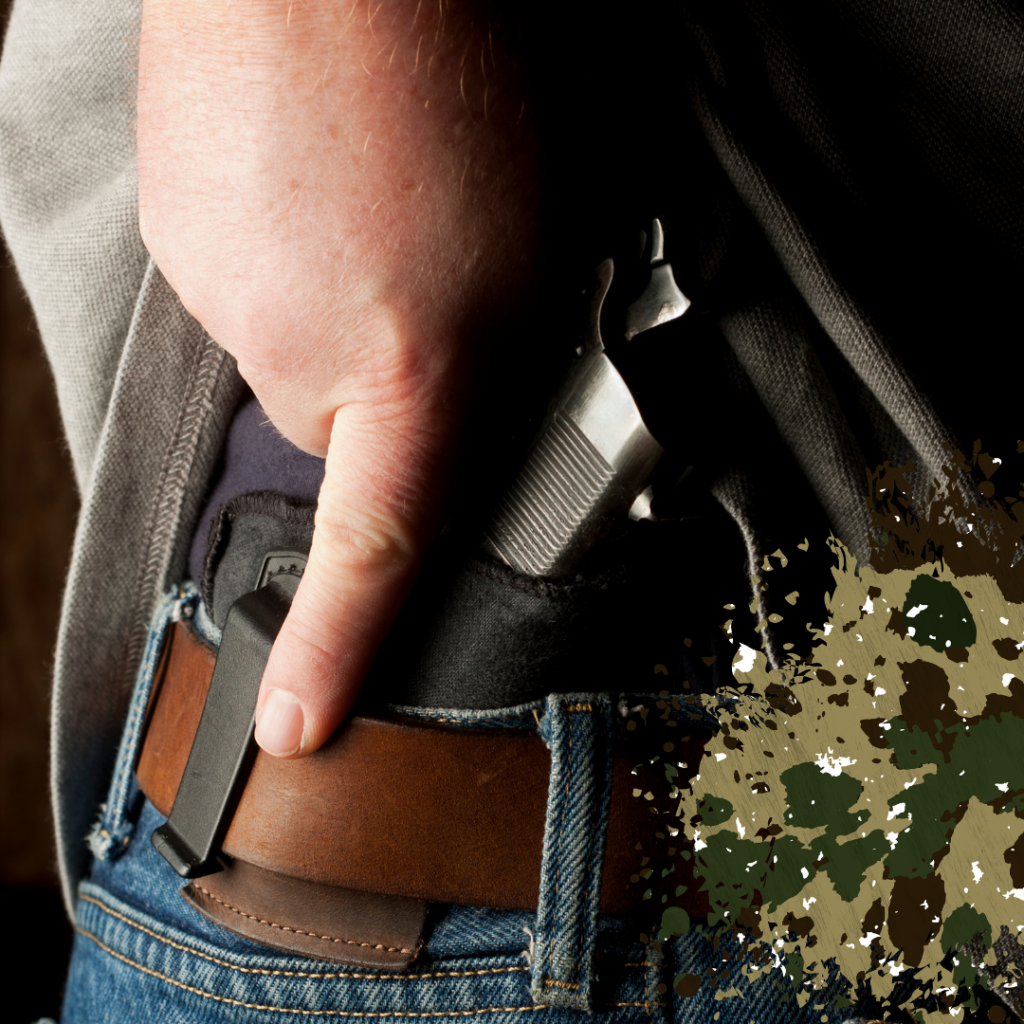
For a new firearm owner, deciding to carry a firearm every day can feel like the final step in becoming prepared. You may have chosen your firearm, purchased the necessary equipment and completed your initial training.
But everyday carry (EDC) is about more than simply having a firearm with you.
Responsible everyday carry means developing a safe, consistent routine around your firearm – from choosing appropriate carry equipment and understanding the law to maintaining safe handling habits and ensuring safe storage when the firearm is not being carried.
Here are six practical everyday carry considerations that new firearm owners may overlook.
1. Your firearm is only one part of your everyday carry system
A firearm does not exist in isolation when it is carried every day. Your holster and other carry equipment are part of the overall safety system.
A suitable holster should be designed for the specific firearm, keep it securely in place and provide appropriate trigger protection. The aim is not simply to make the firearm accessible, but to ensure that it remains secure and safely positioned throughout an ordinary day.
This is why the cheapest or most convenient carry option is not necessarily the best choice. Carry equipment should be selected with safety, security, suitability and your particular circumstances in mind.
2. Your everyday routine matters
A carry setup that feels comfortable for ten minutes at home may feel very different after several hours of driving, working, shopping or sitting at a desk.
Clothing, weather, body position and daily activities can all affect the practicality of a particular carry arrangement. New firearm owners may focus on whether a firearm can be concealed without considering whether they can comfortably and consistently carry it throughout a normal day.
The goal should not be to create a special life around the firearm. It should be to develop a safe and responsible everyday carry routine that fits into the life you already lead.
3. You cannot carry a firearm everywhere
Everyday carry does not mean carrying a firearm into every place you visit.
New firearm owners need to understand the legal requirements governing the carrying and transportation of firearms, including places where firearms may be prohibited or where specific restrictions apply. These requirements can vary according to the circumstances, and ignorance of the law is not a substitute for compliance.
Before making everyday carry part of your routine, make sure you understand the laws and regulations that apply to your particular circumstances.
4. What happens when the firearm comes off your body?
This is an easy part of everyday carry to overlook.
At some point, the firearm will have to be removed – when you arrive home, change clothes, shower, sleep or simply decide that you no longer need to carry it.
At that point, everyday carry becomes a question of safe firearm storage.
A responsible routine therefore needs to cover not only how the firearm is carried, but also where it goes when it is no longer being carried. Safe storage should prevent unauthorised access and should be treated as an integral part of responsible firearm ownership, rather than as a separate issue.
5. Carry equipment cannot replace firearm training
A good firearm and a good holster do not make someone competent.
New owners sometimes spend considerable time researching firearms and carry equipment while giving less attention to developing the knowledge and skills needed to handle a firearm safely and responsibly.
Firearm training should not be regarded as something that ends when the firearm is purchased. Regular, appropriate training helps owners remain familiar with their firearm and equipment while reinforcing safe handling habits.
The equipment you actually carry should also be incorporated into appropriate training, so that your safety habits remain consistent with your everyday carry setup.
6. Carrying a firearm brings responsibility with it
Perhaps the most important consideration is one that cannot be bought in a gun shop: judgement.
Carrying a firearm means accepting responsibility for the consequences of having that firearm with you. A potentially dangerous situation can become a legal matter as well as a personal one, and a defensive firearm incident may be followed by police investigation and legal proceedings.
The purpose of everyday carry should therefore not be to create a sense of invulnerability or to encourage confrontation.
Instead, everyday carry should form part of a broader commitment to responsible firearm ownership: understanding the law, maintaining safe habits, receiving appropriate training and exercising sound judgement.
Key takeaways for new firearm owners
Responsible everyday carry involves more than choosing a firearm. New owners should consider:
- Safe and appropriate carry equipment designed for their particular firearm.
- Their everyday routine, including clothing, work, travel and other activities.
- The laws governing firearm possession, carrying and transportation in their circumstances.
- Safe storage whenever the firearm is not being carried.
- Familiarity with their firearm and carry equipment, supported by appropriate training.
- Sound judgement and personal responsibility, particularly when confronted with potentially dangerous situations.
Everyday carry is not simply about carrying a firearm every day. It is about taking responsibility for everything that comes with doing so.

